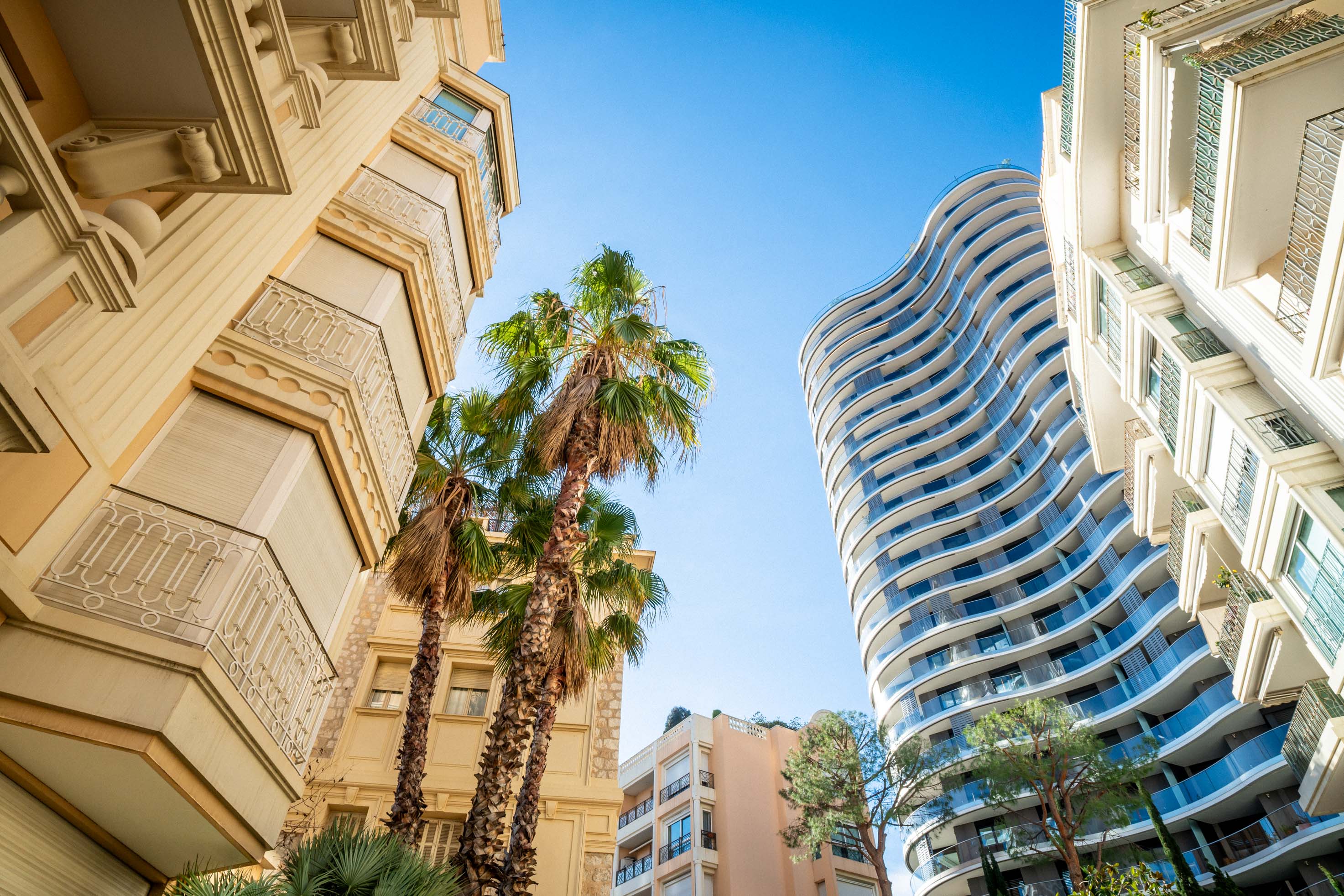
Older or Contemporary in Monaco: A Financial Decision Before an Architectural One
GuidelinesAny property acquisition in Monaco constitutes, by nature, a major financial commitment. In a market where the average entry point for a one-bedroom apartment approaches €3 million and where certain contemporary transactions range between €10 million and €50 million, the choice between older and contemporary property cannot be approached without rigorous economic analysis.
Acquiring older property has historically followed a logic of progressive value creation. Entry costs, although high by international standards, remain on average 20 to 30 percent lower than those of new or ultra-prime contemporary developments. This difference forms the first financial lever: it either reduces initial capital exposure or allows additional budget allocation toward renovation, with high-end restructuring typically ranging between €3,000 and €5,000 per square metre.
In older properties, value is rarely fixed. It depends on location, intrinsic building quality and the purchaser’s ability to unlock latent potential. In Monaco, a well-renovated older apartment delivered to high standards can generate capital appreciation in the range of 25 to 40 percent when the works are executed coherently.
From a financial standpoint, older stock also offers an advantage in terms of liquidity. It appeals to a broader buyer base, representing roughly 60 percent of transactions, which reduces the risk of capital being tied up for extended periods. This relative liquidity is a key factor in a market where average resale timelines range between six and ten months. Older assets also lend themselves more readily to rental strategies, with gross yields generally between 2 and 3 percent - modest but relatively stable.
However, older assets require strict financial discipline. Renovation works may represent 15 to 30 percent of the acquisition price, and exceptional co-ownership charges can be significant depending on building-wide refurbishment programmes. Energy performance is often below contemporary standards, potentially generating additional medium-term costs.
By contrast, contemporary acquisitions follow a different logic. Pricing incorporates construction quality, technical standards and services from the outset. This premium can be substantial, with recent or new properties typically ranging between €65,000 and €120,000 per square metre depending on the development.
From a financial perspective, contemporary property offers greater visibility. Maintenance costs are predictable, energy performance is optimal and technical risk is reduced. Transfer duties may also be lower in certain cases.
This security comes with a very high initial capital requirement. Contemporary assets depend heavily on international ultra-prime demand and may experience volatility of around ±10 percent during periods of global uncertainty. Liquidity relies on a narrower buyer pool.
From a rental standpoint, gross yields in contemporary developments are generally lower, often between 1.5 and 2 percent. Although rents are high in absolute terms, they do not always offset acquisition costs. Contemporary property therefore functions primarily as a capitalisation and prestige asset.
In both cases, Monaco’s structural scarcity remains the common foundation. The choice between older and contemporary assets ultimately reflects a broader patrimonial strategy.