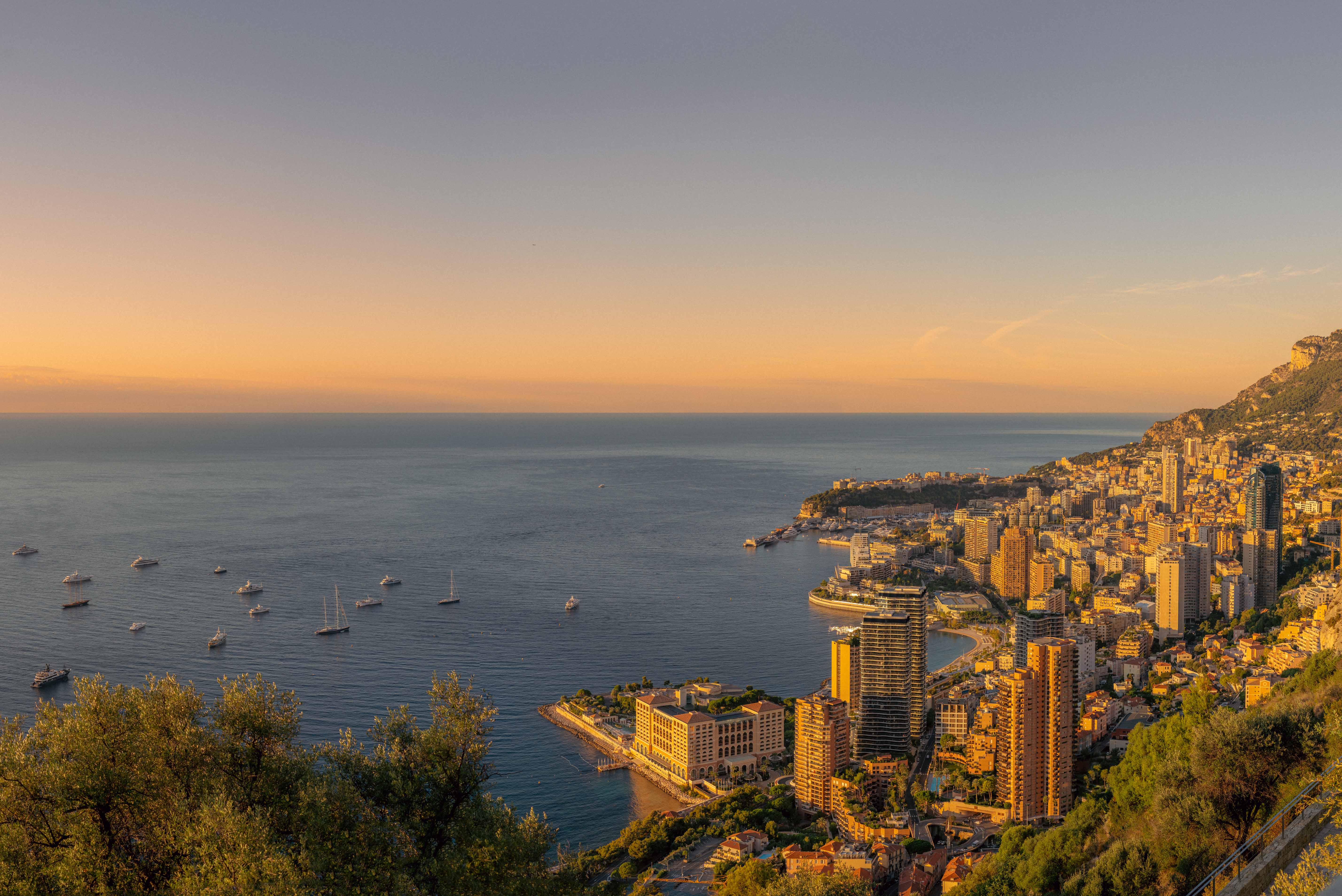
The Transformation of Monaco’s Waterfront
GuidelinesMonaco stands as a case study in urban planning. On barely 2.3 square kilometres, the Principality faces a unique topographical challenge: the Mediterranean on one side, the mountains on the other. This dual constraint has shaped a distinctive model of growth based on verticality and controlled expansion over the sea.
The waterfront, both a national showcase and a symbol of Monaco’s audacity, is the most striking expression of this vision.
Origins (Late 19th – Early 20th Century)
By the end of the 19th century, Monaco had begun transforming its coastline. The first works involved land reclamation for the railway and the expansion of Port Hercule, which had been used since ancient times.
At the turn of the 20th century, the construction of breakwaters and the extension of piers modernised port facilities, marking the start of a long-term maritime development policy.
These early projects foreshadowed the enduring ambition that would define Monaco’s coastal identity.
Postwar Years: The Age of Major Extensions
The 1950s and 1960s marked a decisive turning point. Under Prince Rainier III, Monaco entered an era of accelerated modernisation.
The Railway and the Station: Reclaiming the Coast
The gradual undergrounding of the railway and the station, launched in 1958 and completed in 1964, freed up valuable land along the coast. The old Monte-Carlo station was demolished in 1965.
Three decades later, a new fully underground station was inaugurated in 1999 above the Sainte-Dévote ravine, a model of engineering precision and urban integration.
Fontvieille: Conquering the Sea
Fontvieille remains the emblem of Monaco’s maritime ambition. While the first embankments date back to the reign of Prince Albert I, the modern project took shape in the mid-1960s under Rainier III: 22 hectares reclaimed from the sea, hosting housing, industrial facilities, gardens, a heliport, a circus tent, and the Louis II Stadium inaugurated in 1985.
This expansion increased Monaco’s surface area by nearly 20%, permanently redefining its urban landscape.
Larvotto, Le Portier and the Sporting Area: The Rise of Eastern Monaco
At the same time, the eastern part of the Principality underwent its own transformation. The Larvotto lands, once marshy, were acquired after the war by Gildo Pastor, a key figure in Monaco’s real estate development.
In 1966, Rainier III authorised the construction of high-rise buildings. Hotels, residences, shops, and an artificial beach gave the district its modern, seaside identity.
Completely renovated in the 2020s, the Larvotto 2022 project modernised promenades, commercial areas, and coastal protections, strengthening the district’s touristic and residential appeal. It was also at Monaco’s eastern edge that the Grimaldi Forum and Japanese Gardens were later built - heralding a shift towards cultural and landscaped urbanism.
Into the 21st Century: Density, Modernisation and Sustainability
As Monaco reached its physical limits, its priorities evolved. New urban projects now incorporate stricter standards in energy efficiency, environmental management, and marine biodiversity preservation. Protected seagrass meadows, marine regulations, and carbon reduction targets all led to a more responsible approach, with innovative materials, green spaces, soft mobility, and renewable energy integrated throughout. The waterfront has thus become a laboratory for a dense yet sustainable and aesthetic urban model.
Mareterra / Anse du Portier: The Last Great Coastal Venture
Inaugurated on 4 December 2024, Mareterra represents the culmination of a century of maritime extensions.
This six-hectare eco-district, adding roughly 3% to Monaco’s surface area, combines innovation, prestige, and sustainability.
Luxury residences, a marina, landscaped promenades, and eco-designed buildings rise above an underwater structure of concrete caissons, developed with unprecedented environmental care.
Mareterra stands as proof that Monaco continues to innovate while embracing modern ecological imperatives.
A Territory at Its Limits
Mareterra may well be Monaco’s final large-scale expansion over the sea. Technical, environmental, and regulatory constraints now make any comparable project extremely difficult.
The challenges are manifold:
- Technical and financial: deeper seabeds, stronger swells, greater demands for stability and safety.
- Environmental: protection of ecosystems, seagrass meadows, and hydrodynamic balance.
- Social: balancing prestige, accessibility, and public space.
- Geographical: the Principality has almost reached its natural boundaries, and as the saying goes, “the sea always reclaims its rights.”
Yet, Monaco has never ceased to reinvent itself. From a natural shoreline, it has built a sophisticated urban coastline of ports, beaches, promenades, and neighbourhoods reclaimed from the sea.
The future lies in measured densification, architectural innovation, and the preservation of quality of life, a delicate balance that Monaco appears well prepared to maintain.
The Builders
Behind this transformation stand a few key figures. Prince Rainier III, known as the Builder Prince, reshaped Monaco through a bold policy of maritime expansion and urban renewal.
Alongside him, the Pastor family played an essential role: from Jean-Baptiste and Gildo Pastor, pioneers of construction and real estate, to Patrice Pastor today, who contributed to the Mareterra project, continuing a family legacy intertwined with Monaco’s modern identity.
Conclusion
From rock to sea, from density to sustainability, Monaco’s urban history tells a story of constant adaptation.
Each generation has redefined the limits of what is possible, combining innovation, prestige, and respect for the natural environment.
The waterfront remains the purest expression of this unique synthesis, a blend of technical mastery and urban elegance that continues to define the Principality.