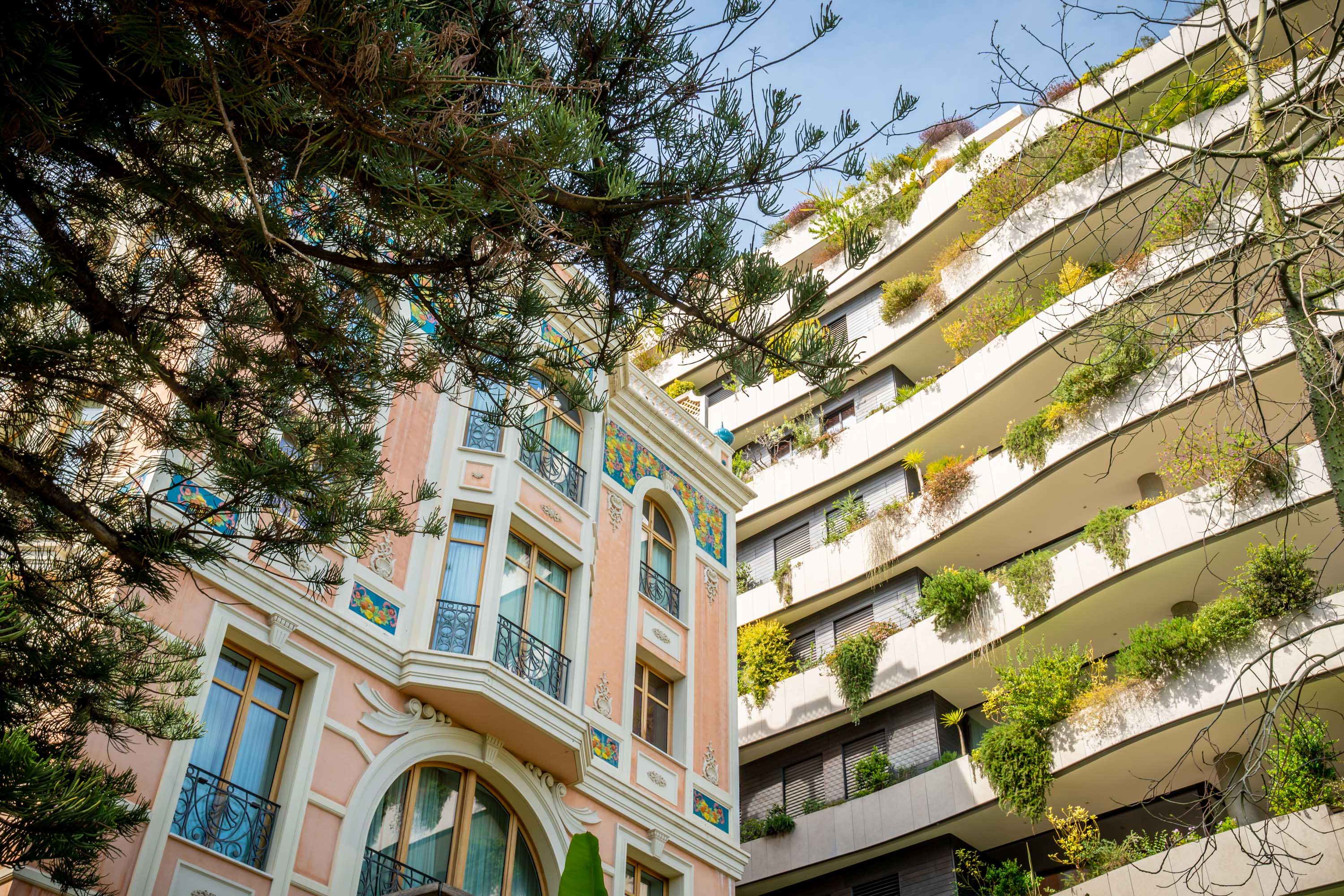
Older and Contemporary Buildings in Monaco: Architectural Heritage and Contemporary Vision
GuidelinesIn Monaco, real estate is never merely a question of surface area or yield. Within a territory of just over two square kilometres, every building forms part of a broader narrative. The distinction between older and contemporary buildings goes well beyond construction date: it reflects the structure of the Principality itself, the profile of its buyers and a particular relationship to time.
The Monégasque market is shaped by a structural tension between two registers: architectural heritage and contemporary vision. On one side stand older buildings carrying identity and urban continuity. On the other, recent developments embody technical modernity, performance and international appeal. Between these two worlds lies a market where average values approach €50,000 per square metre and where the most exclusive programmes comfortably exceed €100,000 per square metre.
Older buildings: architecture rooted in continuity
Older buildings are inseparable from the emergence of modern Monaco. Constructions dating from the late nineteenth and early twentieth centuries, influenced first by the Belle Époque and later by Art Deco, structured the earliest residential districts around the Casino, La Condamine and the historic axes of the Principality.
These properties are characterised by generous volumes, high ceilings, articulated façades and construction methods oriented toward durability. Beyond their technical qualities, they carry strong emotional resonance and embody a historical Monaco that remains deeply present in the collective imagination.
Post-war buildings, particularly those constructed between the 1950s and 1980s, occupy an intermediate position. They often offer attractive floor plans and strategic locations. On the market, such assets remain appealing and present significant repositioning potential through renovation, with value increases that can reach 30 to 40 percent when projects are executed coherently.
Contemporary buildings: projecting modernity
Contemporary developments represent a different reading of the territory: a city oriented toward innovation, verticality and performance. Faced with extreme land scarcity, the Principality has chosen an ambitious construction strategy.
Recent projects combine striking architecture, integrated services, advanced security and high-end amenities. These buildings respond to the expectations of an international clientele for whom property is also a prestige asset.
Their emotional dimension is rooted less in history than in projection: status, absolute comfort and belonging to a global environment. This evolution can sometimes generate a dual perception, combining admiration for technical performance with a degree of nostalgia for a more intimate Monaco.
A market structured by scarcity
Older and contemporary assets follow distinct but complementary logics. Older stock benefits from remarkable stability and from the value creation potential associated with renovation. Contemporary developments reach record price levels justified by novelty, performance and exclusivity.
The choice between these two universes rarely rests solely on financial reasoning. It also reflects a way of living in Monaco and a personal relationship to time.