Monaco 2030: How the Principality is Reinventing its Territory
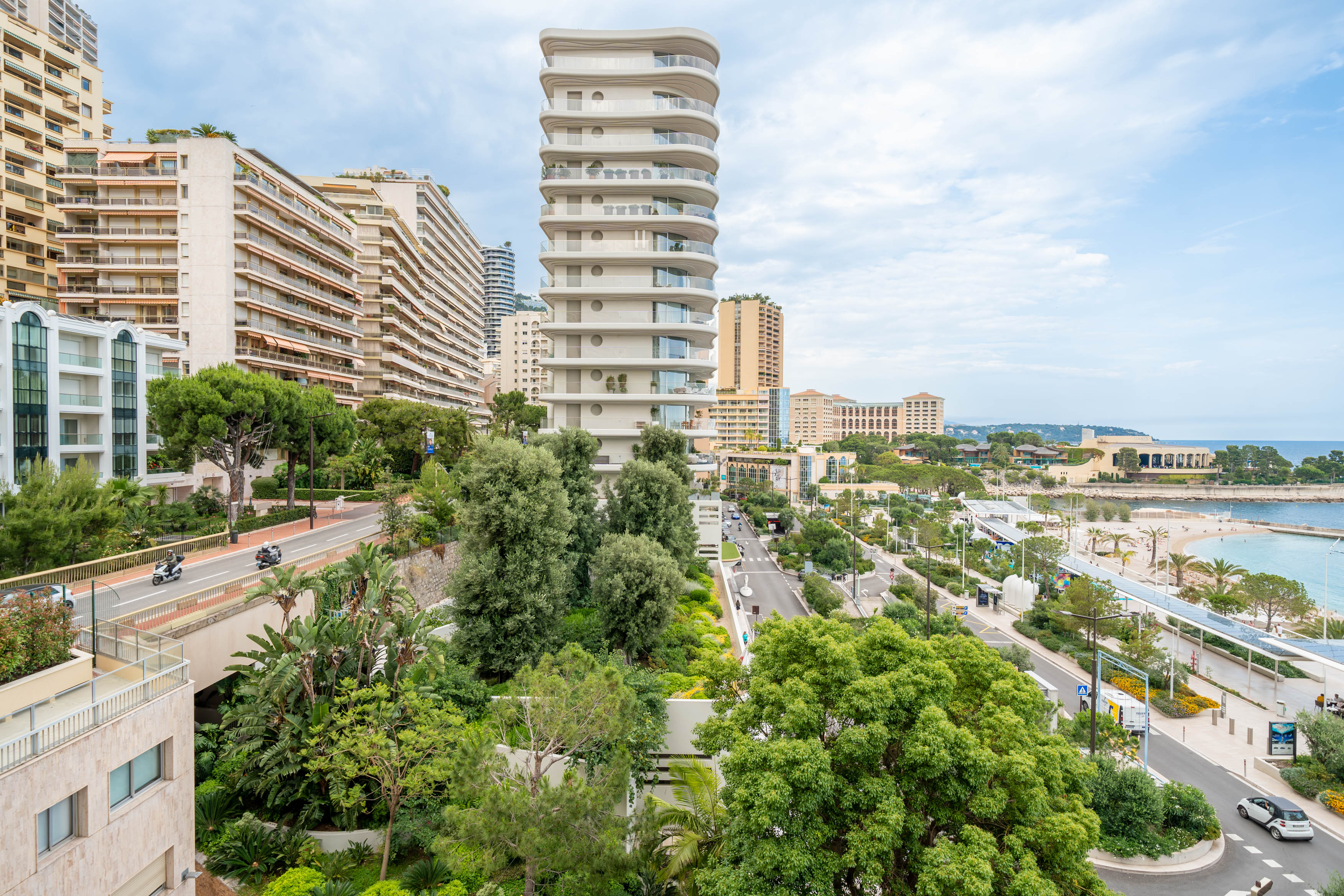
NewsWith nearly 39,000 residents on just 2.2km², Monaco ranks among the most densely populated territories in the world, ahead of many major global cities. This geographical constraint has profoundly shaped its urban development.
Built like a natural amphitheatre between the Mediterranean Sea and the steep relief of the hinterland, the Principality has developed in successive layers. From the harbours and waterfront districts to the heights of the Jardin Exotique and Saint-Roman, the city rises in terraces, each generation of buildings extending this ongoing dialogue between topography and the sea. Within such a constrained environment, Monaco’s urban planning constantly balances the same equation: to densify, modernise and optimise without disrupting the territory’s equilibrium.
Over the decades, the scarcity of land has therefore become a powerful driver of innovation. Carefully managed density, bold architecture, environmental transition and cutting-edge infrastructure: the Principality is moving forward methodically and ambitiously as it prepares for the horizon of 2030.
Beyond individual developments, a deeper transformation is underway. Monaco increasingly evolves through the reconstruction and optimisation of its existing urban fabric. Villas, mid-20th-century buildings and outdated residences are gradually replaced by structures that are more efficient, better integrated and often taller. In a territory where every square metre counts, the city is constantly reinventing itself.
Projects already underway, developments in planning stages and well-founded proposals all contribute to shaping Monaco’s future. For residents and investors alike, understanding these transformations is becoming essential. Here is an overview of the projects that will redefine the Monegasque landscape in the coming years.
1. Housing for Monegasque nationals: a strategic priority
Ensuring access to housing for Monegasque nationals remains a central pillar of public policy. The second phase of the National Housing Plan (2025–2029) confirms this commitment, with the gradual delivery of new state-owned apartments designed to meet the needs of Monegasque families.
Major projects with strong symbolic value
Résidence Bel Air: a large-scale reconstruction
In the western part of the Principality, the former Bel Air building (1966) is being replaced by an ambitious programme of 197 state-owned apartments. Designed by architect Patrick Raymond, the complex consists of three interconnected buildings integrated into the rock and clad in vegetated façades. The development goes well beyond housing alone: a fifty-place nursery, local retail space, offices and more than 300 parking spaces complete a project conceived as a true urban fragment.
Larvotto Supérieur: housing and digital sovereignty
Located on Boulevard du Larvotto, this programme combines 35 state-owned apartments with a strategic data centre for Monaco Telecom. Designed by architect Benjamin Boisson, the building rises over ten floors and adapts to the site’s natural topography. Vegetated façades, patios and landscaped terraces create architecture that is both functional and environmentally integrated. The investment is estimated at €45 million.
Les Lierres – Nathalie: reshaping the Annonciade district
Facing the Odéon Tower, two older buildings will be demolished to make way for a new tower rising between 17 and 19 floors. The project also includes a reorganisation of traffic flows, with the creation of an underground road link designed to ease congestion in this particularly dense area.
Jardin Exotique: a strategic land operation
Through a land swap between the State and private stakeholders, a site located above the Jardin Exotique will allow the redevelopment of the former “Le Prestige” building into a programme of 76 to 90 state-owned apartments.
Other projects underway or planned
- Hector Otto: 76 to 90 apartments
- Résidence Héméra – Block A: 50 apartments
- La Luciole: 27 apartments
Together, these projects demonstrate the Princely Government’s commitment to securing a high-quality housing stock reserved for Monegasque nationals over the long term.
2. Major infrastructure: preparing Monaco for everyday life
Two city gateways undergoing major transformation
Îlot Pasteur: a new urban hub in the west
Recently completed, Îlot Pasteur is one of the most significant urban projects of recent years. It includes a school for 1,500 students, sports and cultural facilities, gymnasium, swimming pool, amphitheatre and media library, offices, a large multipurpose hall, a waste-sorting centre, a data centre and nearly 900 parking spaces. It represents a truly multifunctional district designed to optimise both space and usage.
Saint-Roman interchange: improving access from the east
At the eastern edge of the Principality, the Saint-Roman interchange leading toward Roquebrune-Cap-Martin will undergo a complete redesign aimed at improving traffic flow and cross-border connectivity.
Fontvieille: architecture in dialogue with the Mediterranean
Fontvieille’s shopping centre is set to undergo a striking transformation under the direction of architects Massimiliano and Doriana Fuksas. Their design replaces existing mineral surfaces with fluid, landscaped volumes inspired by the movement of the sea, creating a transformation that is both aesthetic and environmental.
Healthcare and urban development
The modernisation of the Princess Grace Hospital Centre continues, with the aim of maintaining Monaco at the forefront of medical and technological excellence.
Annonciade II: a long-awaited district
Located in the La Rousse district above Place des Moulins, this long-delayed project is now entering a concrete phase. The tender launched in 2025 paves the way for a new mixed-use district including a significant share of state-owned housing on one of the Principality’s last major land reserves.
3. Private residential developments: innovation at work
The private sector continues to play a driving role, with projects combining architectural innovation, premium positioning and optimisation of the existing built environment.
Villa Ninetta (Jardin Exotique)
Recently delivered, this ten-storey residence offers 27 apartments ranging from studios to three-room units, with panoramic duplexes on the upper levels. Residents benefit from a 24-hour concierge service and a private fitness area.
Schuylkill: transforming rather than demolishing
The project designed by Zaha Hadid retains the existing building structure while completely reimagining its interior spaces, an audacious and sustainable approach particularly relevant in a context of extreme land scarcity.
Villa Lucia (Pont Sainte-Dévote)
Located close to the train station, this fourteen-storey tower designed by Alexandre Giraldi offers one apartment per floor on the first nine levels, topped by an exceptional quadruplex featuring a private swimming pool. Valet parking, spa facilities and ultra-high-end services complete the programme.
Villa du Pont and Écrin de Malachite
In the same area, several villas and older buildings are expected to be replaced by contemporary developments, gradually redefining Monaco’s eastern gateway.
Maison Valentina (Condamine)
Facing the market at Place d’Armes, three existing buildings are being replaced by a modern seven-storey structure including banking offices, a notable transformation for this lively and historic district.
Le Red (Avenue de la Costa)
Two historic villas will be replaced by a 23-storey tower on pilotis, with the restoration of green space at ground level. The development will host major institutions alongside around twenty very high-end apartments.
Boulevard d’Italie: heritage and modernity
The Villa Maria and Villa Ariana buildings will be reconstructed while preserving their listed façades, illustrating Monaco’s ability to reconcile heritage preservation with contemporary architectural demands.
Projects under consideration
- Jardin du Larvotto: a plot of around 305 sqm that could host an 11-storey private residence following a land exchange with the State.
- 41 rue Grimaldi: a proposed 18-storey building replacing two villas and a state-owned parcel.
This new generation of developments also reflects a broader structural trend: the progressive verticalisation of Monaco’s urban fabric. Residential towers, mixed-use buildings and high-rise developments make it possible to optimise extremely scarce land. Without disrupting the city’s balance or its visual openness toward the sea, Monaco is reaching densities comparable to those of major global cities while retaining its unique territorial scale.
Conclusion: Monaco, an open-air urban laboratory
Looking ahead to 2030, Monaco is not simply adding square metres, the Principality is fundamentally rethinking its urban model. State housing for nationals, major infrastructure projects, exceptional private residences and landmark developments such as Mareterra all form part of a coherent and long-term vision.
These transformations also have a direct impact on Monaco’s property market. In a territory where territorial expansion remains exceptional, value creation increasingly relies on the reconstruction and upgrading of the existing built environment. This dynamic helps maintain Monaco as one of the rarest and most sought-after residential markets in the world.
Controlled density, architectural innovation, sustainability and quality of life remain the pillars of this strategy. Monaco 2030 is already taking shape, promising a Principality that is ever more modern, more sustainable and firmly oriented toward the future.