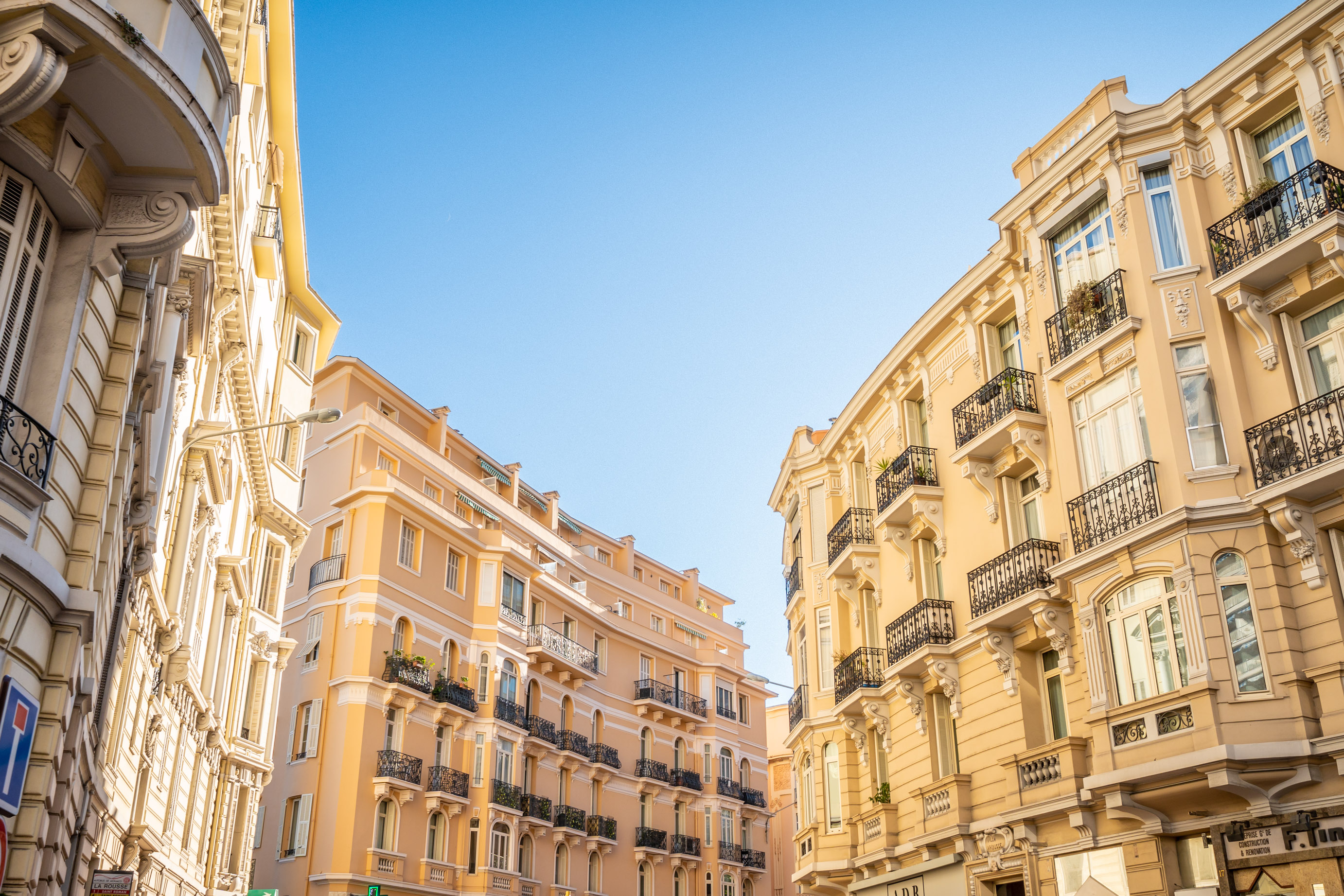
Works in Monaco: A Practical Guide
GuidelinesSetting the scope
We won’t cover new builds or extensions here. Let’s stick to rearrangement/renovation works within private areas: apartments, balconies, terraces. In other words, “simple” projects without heavy demolition.
You’ve found your perfect pied-à-terre in Monaco. The kitchen isn’t quite your style, the bedroom could use fresh paint, and you’re even thinking of knocking down a partition to enlarge the living room. At this point, know that the process will be more complex than expected.
Welcome to the world of Monegasque renovations: every idea means a file, every file a committee, every committee an order… and every order a wait worthy of the Principality’s prestige.
Step 1: The idea
It all starts with a simple thought: “What if we redid the bathroom?” In Monaco, that harmless notion can trigger a rigorous and unavoidable administrative machine.
Step 2: The condominium manager (syndic)
No project escapes the syndic. They will consult the building’s architect, gather various opinions, then submit the matter to the General Assembly - which may be many months away. In addition, any file you submit must be endorsed by a Monegasque architect.
Which works require authorisation?
1. Structure & architecture: removing load-bearing walls, altering structural partitions, or piercing façades.
2. Exterior appearance & use: changing external joinery; modifying balconies/terraces/loggias; changing the unit’s use (e.g., apartment to office).
3. Common elements: any intervention that could affect acoustic/thermal performance or collective safety.
Even a “simple” partition may be concerned if it carries services (e.g., collective heating risers) or if its removal alters the building’s balance over time. In doubt, consult the syndic, an architect, and the DPUM before doing anything.
Step 3: The DPUM
The Direction de la Prospective, de l’Urbanisme et de la Mobilité (DPUM) oversees compliance. Filing a complete application, signed by a local architect, is essential.
Step 4: Site preparation
Once authorisations are obtained, prepare the site: protect common areas and lifts, secure all required insurances, arrange acoustic and vibration surveys. Rigor rules down to the details.
Step 5: Execution
Working hours are strictly regulated:
- Monday-Friday: 8:00–12:00 / 14:00–18:00
- Saturday: 9:00–12:00
- Sundays & public holidays: prohibited.
In summer (1st July – 15th September), restrictions tighten: no noisy works, suspension of major sites in certain districts, limitations on deliveries and machinery. “Silent” works (painting, furniture assembly) may be tolerated, subject to the co-ownership rules.
Step 6: Closing the works
When the works are complete, the DPUM carries out the final compliance inspection (visite de récolement) to check authorisations and technical standards. Only after this validation can the apartment be fully occupied.
Conclusion
Works in the Principality are not a sprint but an endurance event. Rules that may feel demanding exist to protect residents’ quality of life and the integrity of buildings.
Meticulous preparation, the support of a Monegasque architect, and strict compliance with procedures are the keys to a successful renovation.