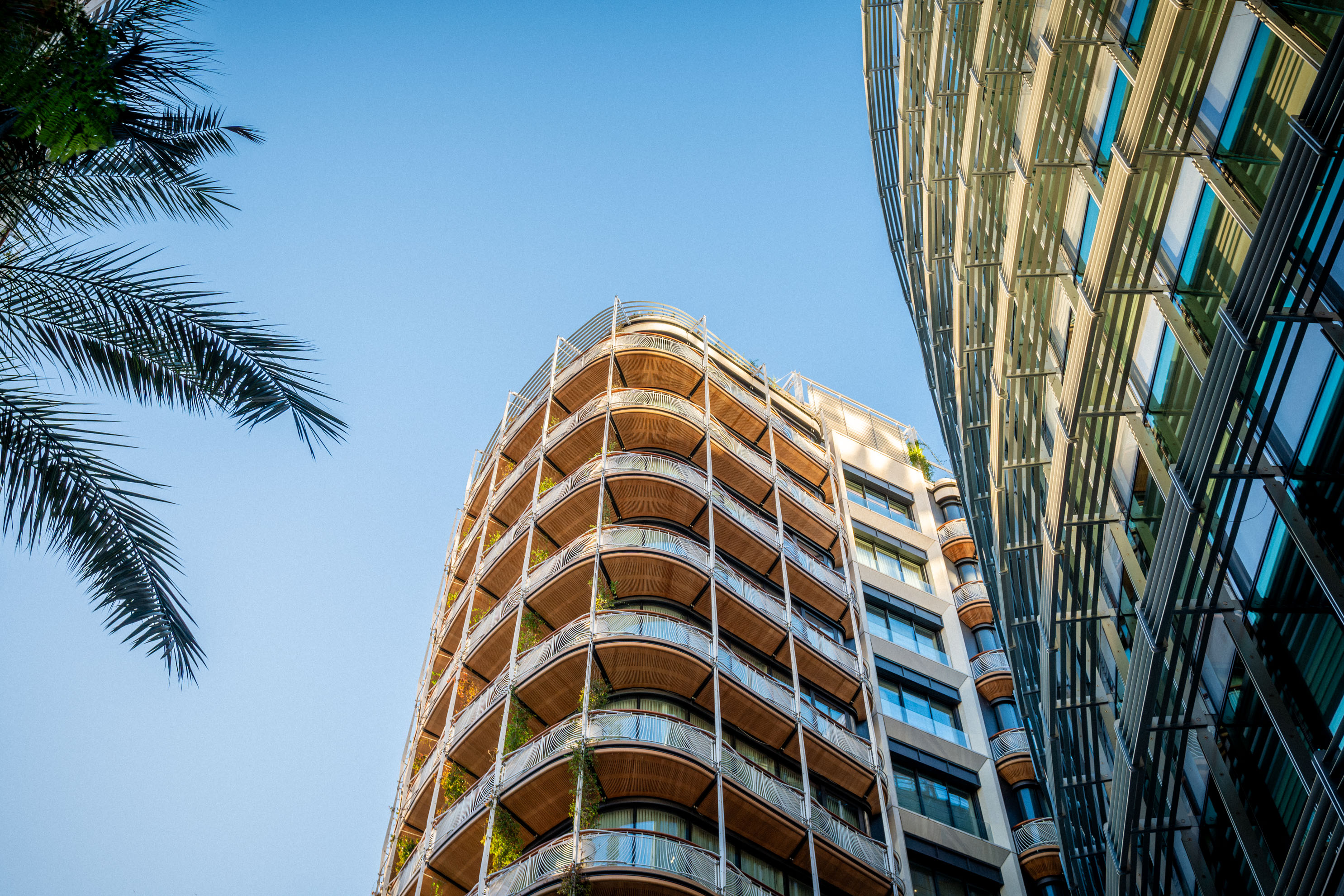
Monaco and Free Air: When Even the Sky Becomes Real Estate
GuidelinesThe Monegasque paradox
In Monaco, even the invisible ends up being buildable.
Here, air is not just a resource to breathe; it has become a real estate asset. In a territory of two square kilometres wedged between sea and mountains, the logic is straightforward: since the ground cannot expand, one must build higher.
What is “free air”?
Elsewhere, free air is what you breathe when you open a window.
In Monaco, it is the invisible volume above a building: an extra floor, a panoramic pool, a spectacular rooftop. It is the local version of “sky is the limit”, except here the sky has a price.
Legally, the “right to free air” is recognised as a real property right, specifically a right of superficies. It dissociates land ownership from ownership of built volumes - a valuable mechanism in an over-saturated market. This right can be sold, transferred, mortgaged. It offers rare legal and financial flexibility, allowing one to monetise spaces otherwise unusable.
How does it work?
A flat roof can become a gold mine, a dusty attic a future penthouse, a piece of sky above a balcony a negotiable asset.
Two documents help determine the existence and ownership of this right:
- The title deed: it may include the right to free air, though not necessarily the roof, which often remains a common element.
- The condominium rules: these may assign the right to the collective or to a specific co-owner.
Even once acquired, this right is not absolute. It remains subject to purchase and to administrative permits.
Servitudes and constraints
Before any upward extension, servitudes of view must be checked. Many buildings - old and sometimes new - are subject to contractual conditions limiting additional storeys.
Then come planning constraints:
- zoning rules (setbacks, attics, flat/green/sloped roofs),
- heritage status of façades or buildings,
- density ratios ranging from 8 to 20 m³ depending on the district.
A precise volumetric calculation is required: if the building already exceeds the authorised volume, no extension is allowed; if spare volume remains, it may allow additional construction.
If the ceiling is reached, the only option is over-density, possible by paying a specific tax based on the difference between construction cost and sale value.
Rental regime
If the building was constructed after 1947, new units created through upward extensions are not subject to restrictive rental regimes, enhancing value. For older buildings, especially in demolition-reconstruction, law n° 1 235 requires that protected rental surfaces be reinstated to preserve the regulated housing stock. Also, every new unit must include at least one parking space.
Valuation of free air
How do you price something intangible?
In practice, value is calculated using admissible land charges, often up to 50% of built square-metre values in the area. Scarcity, technical challenges (asbestos removal, temporary rehousing), and the level of finishes all affect pricing.
Another approach, the developer’s balance sheet, weighs costs against potential sales prices. In any case, the valuation remains theoretical until the building permit is granted. Without authorisation, the right is worthless.
Conclusion
In Monaco, even the sky becomes property.
The next time you look up at the blue heavens of the Principality, remember: that space is not only poetic - it might also be a real estate asset.